

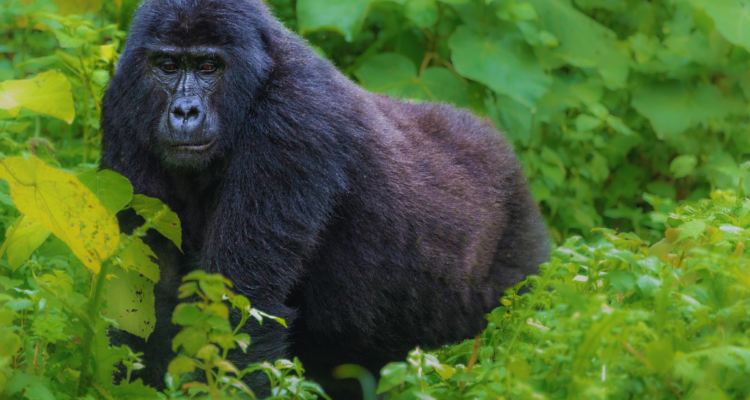
As a safari specialist who has spent the last 15 years navigating the red-dirt roads of East Africa, I’ve seen many travelers focus solely on Rwanda for their primate fix. But if you’re looking for a raw, diverse, and deeply immersive adventure, uganda tours and safaris offer a value proposition that is hard to beat in 2026.
While Rwanda is the “land of a thousand hills,” Uganda is a tapestry of crater lakes, snow-capped peaks, and savannahs teeming with the Big Five. In 2026, the trend has shifted toward “The Grand Circuit”—a journey that doesn’t just stop at the gorillas but traverses the entire length of the Pearl of Africa.
1. Bwindi vs. Mgahinga: Choosing Your Gorilla Experience
When people think of uganda tours and safaris, Bwindi Impenetrable Forest is usually the headliner. However, for 2026, savvy travelers are looking toward Mgahinga Gorilla National Park.
- Bwindi Impenetrable Forest: Home to nearly half the world’s mountain gorillas, Bwindi offers four distinct sectors (Buhoma, Ruhija, Rushaga, and Nkuringo). If you want variety and a range of lodge options from budget-friendly to ultra-luxury, Bwindi is your best bet.
- Mgahinga National Park: This is where “Gold meets Silver.” It’s the only place in Uganda where you can trek both Mountain Gorillas and the rare Golden Monkeys. Sitting on the slopes of the Virunga Volcanoes, the scenery here is strikingly similar to Rwanda but at a significantly lower permit cost ($800 vs. Rwanda’s $1,500).
2. The Primate Capital: Chimpanzee Habituation in Kibale
A safari in Uganda is incomplete without visiting Kibale National Park. While standard chimp tracking gives you one hour with our cousins, the 2026 trend is the Chimpanzee Habituation Experience (CHEX).
Instead of a quick visit, you spend a full day with researchers and a chimp community. You’ll watch them wake up, hunt, patrol their territory, and build their nests at night. It is a masterclass in primatology that offers a level of intimacy you simply can’t find on a standard game drive.
3. Savannah Secrets: Queen Elizabeth and Murchison Falls
Uganda’s savannah parks offer something most travelers don’t expect: variety.
- Queen Elizabeth National Park: Famous for the tree-climbing lions of the Ishasha sector. In 2026, we are seeing more interest in the Kazinga Channel boat safari, which has the highest concentration of hippos in the world.
- Murchison Falls National Park: Here, the mighty Nile River is squeezed through a 7-meter gorge. It’s a powerful sight. A classic uganda safari tour here includes a boat trip to the base of the falls, followed by a hike to the top for a panoramic view of the “Devil’s Cauldron.”
4. The Remote Frontier: Kidepo Valley National Park
For those who have “seen it all,” Kidepo is the final frontier. Located in the far northeast near the South Sudan border, it was recently ranked by CNN as one of Africa’s best parks. It feels like Africa did 50 years ago—vast, silent, and wild. With the new airstrip improvements in 2026, reaching this remote gem is easier than ever, though it still retains its exclusive, off-the-beaten-path soul.
Essential Planning for your 2026 Uganda Safari
Traveling through Uganda requires a bit more “grit” than Rwanda’s paved highways, but the rewards are massive.
- The “Kigali Shortcut”: Many travelers in 2026 are flying into Kigali (Rwanda) and driving 4 hours across the border to Bwindi (Uganda). This saves you the 9-hour drive from Entebbe and allows you to experience two countries in one trip.
- The East Africa Tourist Visa: For $100, you can get a single visa that covers Uganda, Rwanda, and Kenya. It’s the most efficient way to handle your uganda tours and safaris if you plan on crossing borders.
- Best Time to Visit: The dry months of June to August and December to February are peak times. However, the “shoulder seasons” (October and March) offer lush green backgrounds for photography and fewer crowds at the gorilla trailheads.
Editorial Policy & Expert Commitment
This article is grounded in over 15 years of boots-on-the-ground experience in East African tourism. We don’t just curate facts; we live the journeys. Our content is researched using the latest 2026 updates from the Uganda Wildlife Authority (UWA) and follows a strict “People-First” editorial policy. We avoid automated fluff to ensure that every recommendation—from the boots you wear to the parks you pick—is practical, honest, and aimed at making your safari unforgettable.FAQs
- How much is a Uganda gorilla permit in 2026?
As of 2026, the standard permit price for foreign non-residents is $800 USD. This includes park entry, ranger guides, and one hour with the gorillas. If you opt for the Habituation Experience (4 hours), the cost is $1,500 USD.
- Is it safe to travel to Uganda for a safari?
Yes, Uganda is a very safe destination for tourists. The national parks are patrolled by the Uganda Wildlife Authority (UWA) and the Tourism Police. Like any travel, we recommend staying updated on local advisories and traveling with a reputable tour operator.
- What is the difference between trekking in Bwindi and Volcanoes (Rwanda)?
Bwindi is a “true” rainforest—it’s denser, often muddier, and the hikes can be more physically demanding. Rwanda’s Volcanoes National Park offers more open bamboo forests and shorter drives from the airport. If you want a rugged adventure, choose Uganda; if you want luxury and speed, choose Rwanda.
- Can I see the “Big Five” in Uganda?
Yes! You can see lions, leopards, elephants, and buffalo in parks like Queen Elizabeth and Murchison Falls. To see the fifth, the Rhino, you will visit the Ziwa Rhino Sanctuary en route to the north, where you can track them on foot.
- Do I need a Yellow Fever vaccination?
Yes. A Yellow Fever vaccination certificate is a mandatory requirement for entry into Uganda. You will often be asked to show your “Yellow Book” at Entebbe International Airport or land borders.
Contact Details
- Company Name: Gorilla Safari Rwanda
- Official Website: https://www.gorillasafarirwanda.net/
- Address: Plot 1958, Bweya Kanyigo, Along Kajjansi Bweya Lutembe Rd, Near Westminster Christian Institute Uganda.
- Email: info.primeugandasafaris@gmail.com
- Phone / WhatsApp: * (+256) 414-532-162 (Office)
- (+256) 773-912-891 (WhatsApp)
- (+256) 702-123-064 (Mobile)
- (+256) 702-181-380 (Emergency)
More posts for you

Over 300 excellent reviews on TripAdvisor
Over 50 excellent reviews on Safaribookings.
Over 50 excellent reviews on Safaribookings.
12+ years of experience.
Best price guarantee.

Cate

Samuel
Speak to a safari specialist to plan your customized Uganda safari and East African tours...
Get top notch safari advice: Call us or schedule a video meeting with our experts.