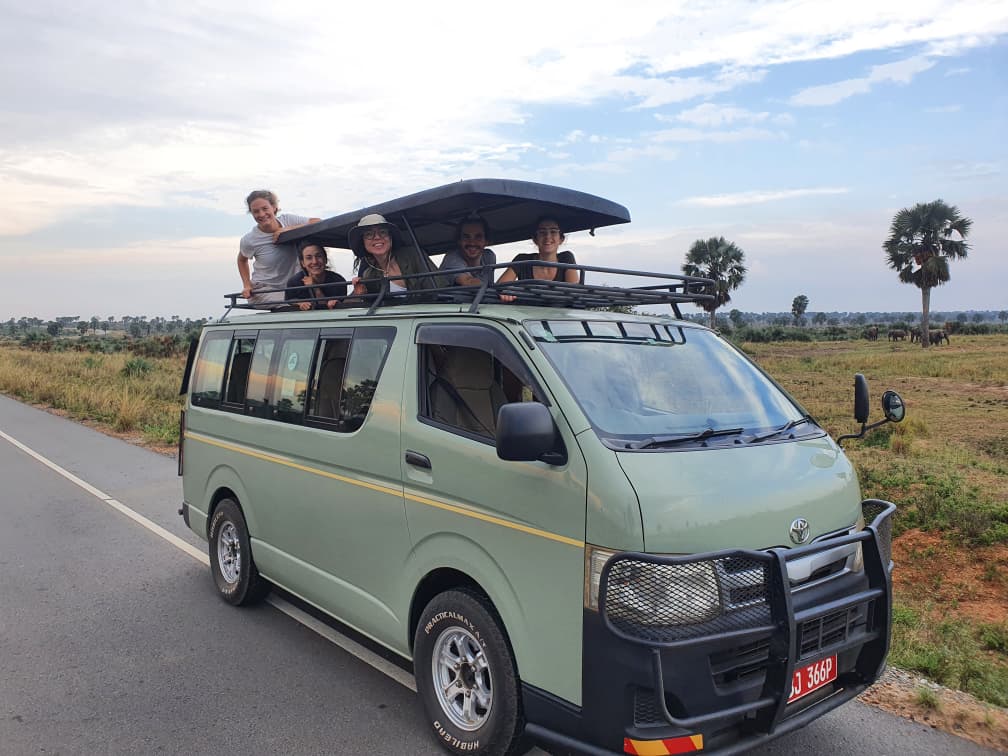
If you’d like, share your dates and your bird “wish list”—and we’ll help you put together a Rwanda birding safari that makes the most of your time.
Rwanda bird checklist (high-level)
Rwanda is a genuine hotspot for birders, with an impressive mix of forest, wetland, and savannah species.
Based on Rwanda Development Board (RDB) records (2018), there are around 703 confirmed species—and the list can change over time as new sightings are recorded.
Below is a simple way to think about Rwanda’s birdlife, drawing on widely used references such as BirdLife International.
Albertine Rift endemic bird species

The Albertine Rift is famous for its endemics, and Rwanda is one of the best places to look for them. The country has about 29 Albertine Rift endemics, most often seen in high-altitude forests such as Nyungwe and Volcanoes National Park.
Here’s the full list of Albertine Rift endemic birds referenced in this guide:
- Albertine boubou
- Albertine owlet
- Archer’s robin-chat
- Black-faced apalis
- Blue-headed sunbird
- Congo bay owl
- Dusky crimsonwing
- Grauer’s swamp warbler
- Grauer’s warbler
- Handsome francolin
- Kivu ground thrush
- Kungwe apalis
- Neumann’s warbler
- Purple-breasted sunbird
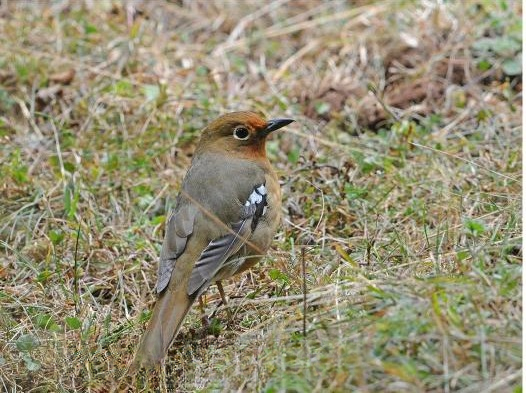
- Red-collared babbler (also known as red-collared mountain babbler)
- Red-faced woodland warbler
- Red-throated alethe
- Regal sunbird
- Rockefeller’s sunbird
- Ruwenzori apalis
- Ruwenzori batis
- Ruwenzori double-collared sunbird (also known as Stuhlmann’s sunbird)
- Ruwenzori nightjar
- Ruwenzori turaco
- Schouteden’s swift
- Strange weaver
- Stripe-breasted tit
- Willard’s sooty boubou (also known as mountain sooty boubou)
- Yellow-eyed black flycatcher
These birds are a big reason many birders focus on Rwanda’s higher-altitude forests.
Other birds people hope to see in Rwanda
Beyond the endemics, Rwanda has everything from sunbirds and raptors to forest specials, savannah birds, and waterbirds. A lot of what you’ll see depends on where you go—and what time of year you visit.
Here’s a practical, habitat-based overview of other birds you may encounter.
1) Colorful birds (sunbirds and allies)
Bronze sunbird; green-headed sunbird; malachite sunbird; northern double-collared sunbird; olive sunbird; scarlet-chested sunbird; scarlet-tufted sunbird (also known as red-tufted sunbird); variable sunbird; copper sunbird; olive-bellied sunbird; red-chested sunbird; and blue-naped mousebird.
2) Predatory birds (raptors and owls)
African fish eagle; augur buzzard; bat hawk; Cassin’s hawk-eagle; mountain buzzard; palm-nut vulture; rufous-breasted sparrowhawk; Verreaux’s eagle-owl; barred long-tailed cuckoo; Fraser’s eagle-owl; and red-chested goshawk.
3) Common resident birds
Black kite; common bulbul; speckled mousebird; pied kingfisher; African olive pigeon (also known as Rameron pigeon); dusky turtle dove; lemon dove; blue-spotted wood dove; crowned hornbill; spot-flanked barbet; double-toothed barbet; yellow-rumped tinkerbird; western tinkerbird; chinspot batis; grey cuckooshrike; white-necked raven; African thrush; Cape robin-chat; northern grey-headed sparrow; spectacled weaver; and village indigobird.
4) Migratory birds
Osprey; pennant-winged nightjar; scarce swift; African black swift; Horus swift; pink-backed pelican; rufous-bellied heron; lesser jacana; African snipe; long-toed lapwing; African wattled lapwing; African rail; lesser moorhen; fiery-necked nightjar; square-tailed nightjar; and East African pitta.
5) Montane birds
Cinnamon bracken warbler; mountain yellow warbler; evergreen forest warbler; brown woodland warbler; Chubb’s cisticola; trilling cisticola; singing cisticola; wing-snapping cisticola; chestnut-throated apalis; grey apalis; black-throated apalis; Rwenzori hill babbler; mountain illadopsis; arrow-marked babbler; and grey-chested babbler.
Also worth looking out for: Waller’s starling; Stuhlmann’s starling; Sharpe’s starling; Abyssinian thrush; brown-backed scrub robin; grey tit-flycatcher; ashy flycatcher; white-eyed slaty flycatcher; African dusky flycatcher; white-starred robin; white-bellied robin-chat; brown-chested alethe; white-browed robin-chat; snowy-crowned robin-chat; red-capped robin-chat; equatorial akalat; African stonechat; and collared sunbird.
6) Forest birds
Great blue turaco; blue malkoha; Afep pigeon; white-spotted flufftail; red-chested owlet; forest wood-hoopoe; black-and-white-casqued hornbill; white-thighed hornbill; eastern yellow-billed barbet; Willcocks’s honeyguide; least honeyguide; buff-spotted woodpecker; Elliott’s woodpecker; grey parrot; yellow-bellied wattle-eye; and others.
You may also see species such as Lühder’s bushshrike; red-eyed puffback; velvet-mantled drongo; dusky tit; slender-billed greenbul; yellow-whiskered greenbul; plain greenbul; leaf-love; white-chinned prinia; black-faced rufous warbler; brown illadopsis; white-tailed ant-thrush; little green sunbird; blue-throated brown sunbird; olive-bellied sunbird; Vieillot’s black weaver; and white-breasted nigrita.
7) Savannah species
Red-faced barbet; northern brown-throated weaver; papyrus gonolek; white-winged swamp warbler; Carruthers’s cisticola; white-collared oliveback; grey crowned crane; shoebill; rufous-naped lark; pale-throated greenbul; Kakamega greenbul; Kikuyu mountain greenbul; little greenbul; Cabanis’s greenbul; yellow-streaked greenbul; white-headed saw-wing; black saw-wing; red-throated rock martin; Angola swallow; African red-rumped swallow; and white-browed crombec.
Also common in open habitats: African yellow warbler (also known as dark-capped yellow warbler); black-throated wattle-eye; brown-throated wattle-eye; many-colored bushshrike; pink-footed puffback; northern puffback; tropical boubou; Petit’s cuckooshrike; MacKinnon’s shrike; grey-backed fiscal; northern fiscal; mountain oriole (also known as black-tailed oriole); blue-mantled crested flycatcher; white-tailed blue flycatcher; and white-bellied crested flycatcher.
8) Nocturnal birds
Rwenzori nightjar; other nightjar species; African long-eared owl; and red-chested owlet.
9) Waterbirds
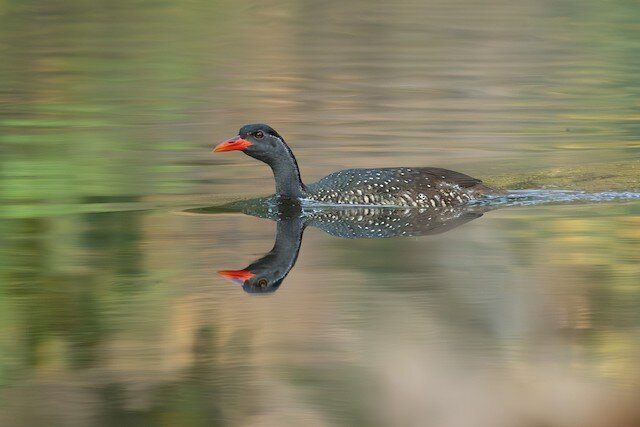
White-breasted cormorant; pied kingfisher; African finfoot; papyrus yellow warbler; papyrus canary; lesser jacana; white-backed duck; African pygmy goose; blue-billed teal; African black duck; yellow-billed duck; red-billed teal (also known as red-billed duck); and southern pochard.
Overall, Rwanda’s bird list is part of what makes a trip here so fun—you can go from hotel gardens in Kigali to wetlands and boat trips on Lake Ihema in a matter of days.
If you’re planning a visit, a guided birding day (or two) is a great way to start building your Rwanda list.
Important birding areas and hotspots in Rwanda
Rwanda has around seven Important Bird and Biodiversity Areas (IBAs), spanning rainforest, savannah, lakes, and wetlands—so you can cover very different birding styles in one trip.
From classic savannah birding to papyrus swamps and high-altitude forest, these sites give you a shot at everything from waterbirds to Albertine Rift specials.
Volcanoes National Park
Volcanoes National Park sits in the Virunga Mountains at roughly 2,600–4,507 m, with Rwanda’s highest peak, Mount Karisimbi, rising above the park. Birders record around 200 species here, including about 17 Albertine Rift endemics.
Highlights can include scarlet-tufted sunbird (a Rwanda speciality in Volcanoes NP), Ruwenzori turaco, dusky crimsonwing, strange weaver, Archer’s robin-chat, red-faced woodland warbler, and Ruwenzori double-collared sunbird.
For the best chances, go with a specialist bird guide and use the park’s trail network—Mt. Bisoke hikes can be especially productive.
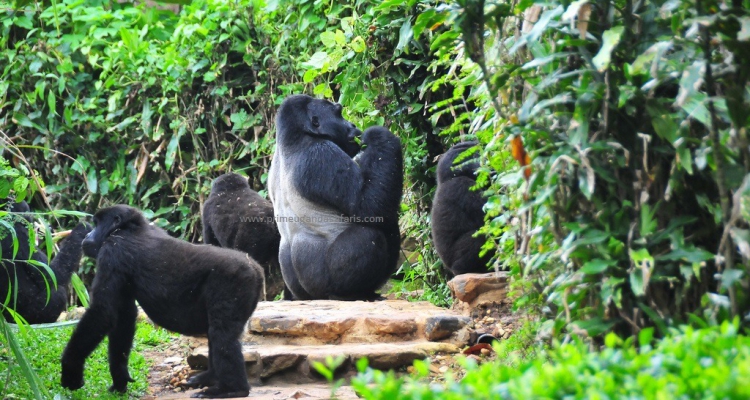
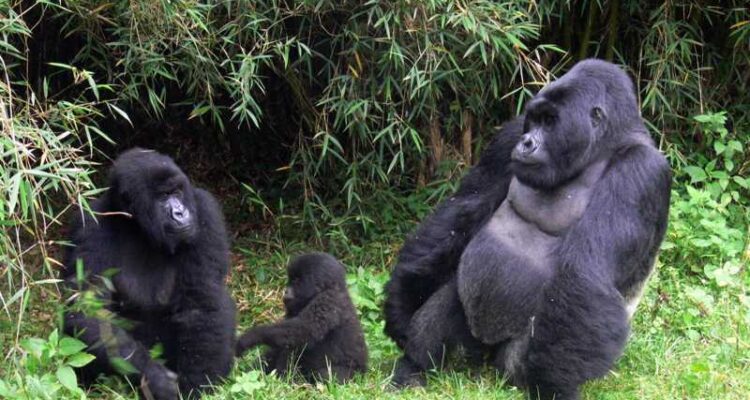
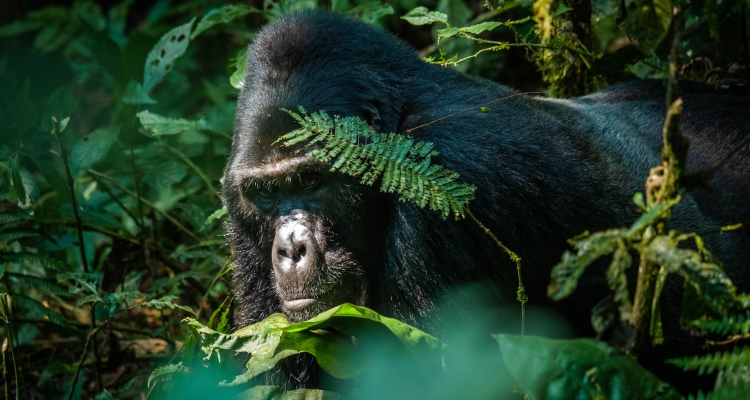
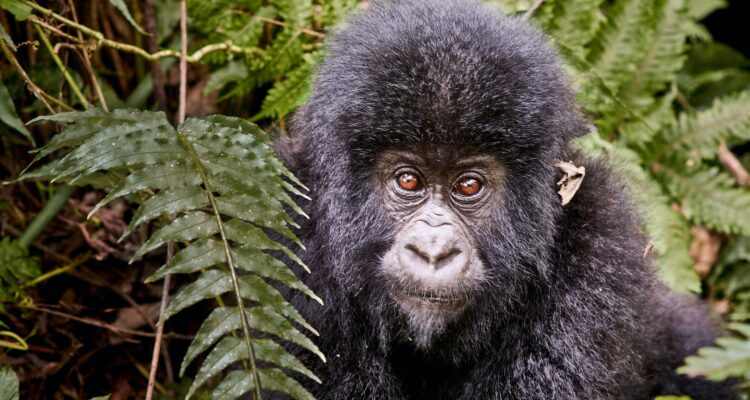
It’s also one of the few places where you can realistically combine forest birding with mountain gorillas and golden monkeys—a big reason Volcanoes NP is so popular for mixed wildlife itineraries.
Akagera National Park
Akagera is Rwanda’s only savannah national park, with a mix of rolling hills, lakes, wetlands, and woodland. Birders have recorded around 490 species here, including several range-restricted highlights.
Standouts can include red-faced barbet (often around Akagera Game Lodge), northern brown-throated weaver, papyrus gonolek, white-winged swamp warbler, Carruthers’s cisticola, white-collared oliveback, grey crowned crane, African fish eagle, and the vulnerable shoebill.
A boat cruise on Lake Ihema is excellent for waterbirds (including African finfoot), while night drives can turn up nocturnal species such as Verreaux’s eagle-owl and nightjars.
Many birders find the southern sector especially rich, with more variety than the far north.
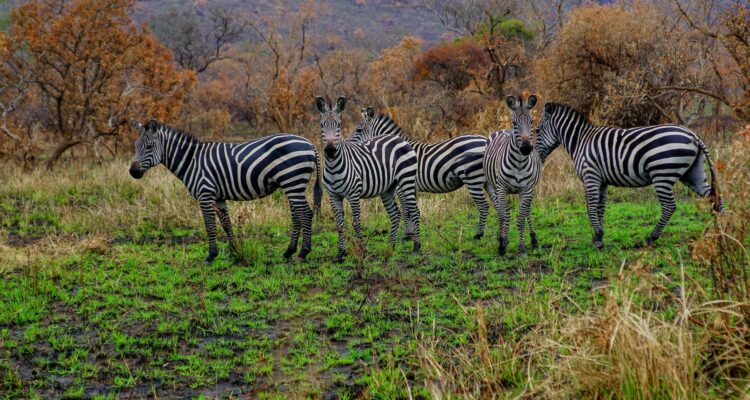
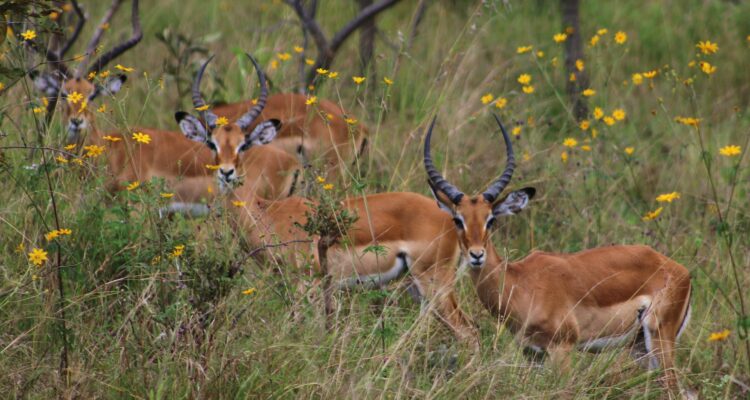
And because it’s a classic savannah ecosystem, you’ll often see plenty of other wildlife too—elephants, hippos, and (in some areas) lions.
Nyungwe National Park
Nyungwe is a large montane rainforest with around 322 recorded species, including many of Rwanda’s Albertine Rift highlights (often cited as about 29 endemics for the country).
Targets here include red-collared babbler, Ruwenzori turaco, handsome francolin, Kivu ground thrush, purple-breasted sunbird, blue-headed sunbird, and rarities such as Congo bay owl and Albertine owlet.
Go with an experienced bird guide and use trails such as the Karamba Birding Trail; the canopy walkway can also be great for views into the forest.
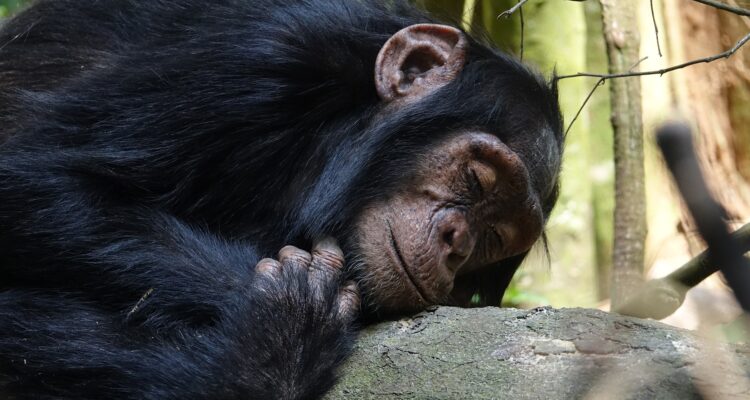
Depending on regulations and availability at the time of your visit, evening activities may help with nocturnal species. Nyungwe is also famous for primates—chimpanzees and several monkey species—so it’s a strong choice if you want birds and primates on the same itinerary.
Gishwati-Mukura National Park
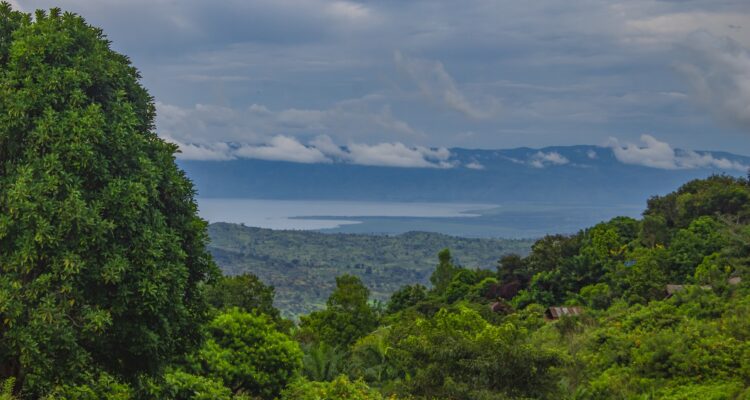
Gishwati-Mukura is Rwanda’s newest national park, in the mountains above Lake Kivu. It’s a landscape under restoration, and birders have recorded about 232 species in Gishwati and 163 in Mukura, including several Albertine Rift endemics.
Highlights can include Grauer’s swamp warbler, purple-breasted sunbird, Ruwenzori turaco, handsome francolin, and strange weaver.
Guided walks with local experts are the best way to explore the regenerating forest and pick up the area’s key species.
Keep an eye out for other wildlife as well—chimpanzees and monkeys are sometimes seen in the wider landscape.
Kigali (city birding)
Kigali can be surprisingly good for a short birding session, especially in hotel gardens and nearby wetlands. Depending on where you go, birders can find well over 100 species around the city.
Notable birds recorded around Kigali include white-collared oliveback, grey-headed bushshrike, bat hawk, Narina trogon, lesser honeyguide, brown-backed honeybird, African swamphen, black cuckooshrike, red-chested sunbird, bronzy sunbird, African goshawk, palm-nut vulture, crested barbet, Rüppell’s starling, grey-backed fiscal, and black-headed weaver.
Good local spots include hotel gardens, Nyarutarama Lake (often called Lover’s Lake) near the Kigali Golf Club, and Umusambi Village, which is known for its restored habitat and grey crowned cranes.
New green spaces and wetland restoration projects around the city continue to add birding opportunities over time.
It’s a great add-on at the start or end of a trip—ideal for a quick morning walk before you head out to the national parks.
Lake Kivu
Lake Kivu is a relaxed stop with plenty of birdlife along the shoreline and in nearby gardens. Depending on the area and season, you can expect roughly 100–200 species in the wider Lake Kivu region.
Look out for white-breasted cormorants, pied kingfishers, osprey, and a mix of woodland and garden birds such as double-toothed barbet, yellow-bellied waxbill, familiar chat, brown-throated wattle-eye, spot-flanked barbet, and African goshawk.
Boat trips can be productive, and so can simple walks around hotel gardens in Karongi, Rubavu, and Rusizi—especially with a local guide.
The Kinunu area is good for common species, and it’s also just a beautiful place to slow down—watch for fish eagles and enjoy the lake views between busier birding days.
Rivers, wetlands, and marshes
Wetlands and marshes cover roughly 10% of Rwanda and are some of the best places for waterbirds and papyrus specialists. In the wider Bugesera area, birders have recorded hundreds of species, including sought-after birds such as Grauer’s swamp warbler.
Typical wetland highlights include papyrus yellow warbler, papyrus canary, white-winged swamp warbler, papyrus gonolek, white-collared oliveback, lesser jacana, white-backed duck (rediscovered locally in 2014), plus species such as red-chested sunbird, palm-nut vulture, blue-naped mousebird, African fish eagle, and many other waterbirds.
Rugezi Marsh (often cited as Rwanda’s only Ramsar site) is especially important for the endangered Grauer’s swamp warbler and for grey crowned cranes. Boat rides on Lake Nyagafunzo can help you look for them.
Akanyaru and Nyabarongo wetlands are also recognised as important bird areas by BirdLife International, with a strong mix of swamp and riverine species.
Where access is possible, guided walks and boat trips can be very rewarding—and you may even spot wetland mammals such as sitatunga in some areas.
Other birding areas in Rwanda
- Buhanga Eco-Park: Near Volcanoes, good for migratory African pitta and forest birds.
- Umusambi Village: In Kigali, a restored habitat with over 100 species and rescued grey crowned cranes.
- Rugezi: High-altitude swamp with around 194 species, including papyrus canary.
- Akanyaru Wetlands: Along the Burundi border, with species such as Madagascar squacco heron and pallid harrier.
- Busaga Forest: A small remnant of montane forest (about 150 hectares).
- Nyabarongo Wetlands: Known for Grauer’s swamp warbler and papyrus gonolek.
- Bugesera District lakes: A mix of savannah-edge habitats and waterbirds.
- Gisakura Tea Estate: Near Nyungwe, good for grassland and forest-edge birds.
- Kamiranzovu Swamp: In Nyungwe, for swamp specialists.
- Nyirakigugu and Burera lakes: Northern lakes with good waterbird viewing.
- Mashoza and Ibanda-Makera forests: Southeastern relic forests with woodland species.
Guidelines for responsible birding in Rwanda
To keep birding ethical and low-impact, a few simple habits make a big difference:
- Don’t disturb birds or their habitat—avoid chasing or flushing them.
- Keep a respectful distance from nests, and never handle eggs or chicks.
- Avoid flash photography, especially near breeding sites or large flocks.
- Respect private property and ask permission before entering.
- Leave no trace: take your litter with you and stick to established paths where possible.
- Follow park rules, and consider using an experienced local bird guide in protected areas.
- Keep group sizes small to reduce noise and impact.
- Log sightings on eBird if you use it—it helps build long-term records.
Done well, birding supports conservation and keeps these places healthy for the birds—and for future visitors.
Best time to visit Rwanda for birding
Many people prefer the drier months (June–September and December–February), when trails are easier and it’s simpler to cover multiple sites.
Migrants: December–February often brings Palearctic and intra-African visitors, which can boost wetland and savannah birding.
In Nyungwe, January–June can be excellent because birds are more vocal, though the heavier rains around April can make some paths muddy.
Birding is possible year-round, but if you’re also planning hikes, boat trips, or gorilla trekking, the drier periods usually feel more comfortable.
As anywhere, early mornings and late afternoons tend to be the most productive—especially if you’re hoping for shy or nocturnal species.
How to get to Rwanda (and get around)
Most trips start with a flight into Kigali International Airport. You’ll find connections via airlines such as RwandAir, Ethiopian Airlines, and Qatar Airways (routes vary by season).
From Kigali, it’s easy to reach the main birding areas by road—typically in a 4×4 with a driver-guide. As a rough guide: Nyungwe is about 5–6 hours, while Volcanoes and Akagera are often 2–3 hours each (traffic and weather can change this).
Travel tips
- Many nationalities can get a visa on arrival or apply online—check the current requirements before you travel.
- Local operators can arrange transfers, permits, and specialist bird guides.
- If you’re planning a multi-country itinerary, it’s possible to add Uganda or Tanzania by road (depending on your route and border requirements).
- Pack light and practical; Rwanda’s main roads are generally in good condition, but some forest tracks can be muddy after rain.
Where to stay on a Rwanda birding trip
Here are a few lodges and hotels that work well as bases for birding (choices depend on budget and availability):
- Sabyinyo Silverback Lodge (Volcanoes): Gardens can be good for Albertine Rift specials.
- Nyungwe House (Nyungwe): Convenient for forest birding and guided walks.
- Ruzizi Tented Lodge (Akagera): Good access for boat-based birding.
- Mantis Akagera Game Lodge (Akagera): Handy base near prime savannah and wetland areas.
- Five Volcanoes Boutique Hotel (Ruhengeri): Practical mid-range option for Volcanoes NP.
- Wilderness Bisate Lodge (Volcanoes): High-end base with great forest setting.
- Le Bambou Gorilla Lodge (Volcanoes): Useful for Volcanoes NP and day trips toward Rugezi.
- Magashi Camp (Akagera): Luxury camp in the savannah.
- One&Only Gorilla’s Nest (Volcanoes): High-end option with easy access to park activities.
If you share your route and budget range, it’s easier to narrow down the best-fit places to stay.
Typical costs for birding in Rwanda
Costs vary widely by comfort level and permit availability, but these are common budget items to plan for:
- Tour packages: Often quoted around $7,000–$10,000 per person for 12–16 days (depending on inclusions and group size).
- Park entry fees: Commonly around $40–$100 per person/day in parks such as Nyungwe or Akagera.
- Gorilla permits (if you add gorillas): Often quoted at $1,500 per person.
- Accommodation: Roughly $200–$800 per night, depending on lodge standard and season.
- Vehicle + driver: Often $100–$200 per day.
- Boat trips: Commonly $30–$50 per person.
- Guides: Often $50–$100 per day for specialist guiding (varies by park/operator).
- International flights: Costs vary a lot by origin and season.
- Visa fees: Often around $30–$50 (check current rates).
- Tips and extras: Budget a little flexibility for gratuities, drinks, and incidentals.
If you’re comparing options, a reputable operator can help you balance permits, driving time, and budget.
Rwanda birding tour operators
If you’re booking through a company, here are a few operators that advertise Rwanda birding or wildlife itineraries (always compare inclusions and reviews):
- Prime Safaris and Tours Ltd
- Wild Gorilla Safaris
- Gorilla Safari Rwanda
- Gorilla Tracking Rwanda
- Africa Safaris Tours
- Gorilla Safaris And Tours
If you reach out to operators, ask for a clear day-by-day plan, what’s included, and how guiding is handled.
Rwanda offers varied birding trips, from park-focused to combined activities.
NATIONAL PARK FOCUSED TOURS
- Akagera National Park: Emphasizes savannah, woodland, and wetland birds like red-faced barbet; includes boat rides.
- Nyungwe Forest National Park: Targets montane rainforest species, including red-collared babbler.
- Volcanoes National Park: For Albertine Rift endemics alongside gorilla tracking.
- Gishwati-Mukura National Park: Diverse birding in rehabilitated forests.
COMBINED ACTIVITY-FOCUSED TOURS
- Birding and Gorilla Tracking Tours: Blend spotting endemics with tracking mountain gorillas in Volcanoes NP.
- Primate and Birding Trips: Combine chimpanzees/golden monkeys in Volcanoes NP and Nyungwe with forest birds.
- Wildlife and Birding Safaris: Multi-park trips for birds, Big 5, and primates.
LOCATION-BASED TOURS
- Albertine Rift Endemic Tours: Focus on unique species in Nyungwe and Volcanoes NP.
- Wetland and Marsh Birding Holidays: Explore Rugezi and Akanyaru for swamp warblers.
- Kigali Urban Birding: Short city-based trips for lodging gardens and lakes like Nyandungu Eco-Park and nearby wetlands.
TOUR LENGTHS
- Short Tours: 3-5 days, e.g., Akagera or Nyungwe focus.
- Long Safari Tours: 7-16 days for comprehensive coverage.
- Multi-Country Tours: Combine with Uganda/Tanzania for broader Eastern Africa birding.
Top Rwandan Birding Safari Packages
- 16-Day Bird Watching Adventure Safari: $7,499/person, includes gorillas, chimps, and shoebills.
- 12 Days Birding Rwanda and Gorilla Walking: Customized, around $7,000-$9,000.
- 8-Day Rwandan Birding Holiday: Focus on Nyungwe and Akagera, pricing on request.
- 12 Days Safaris, Primates and Birding: $7,415/person for two sharing.
- 16-Day Rwandan Birding and Wildlife Tour: Includes gorilla permits at an extra $1,500.
Birding Tips to Consider When on Bird Watching Trips in Rwanda
- Pack binoculars and light-colored, quiet clothing to blend in.
- Birdwatching requires patience; focus on early mornings/late afternoons when birds are active.
- Hire the park’s expert bird guides for better sightings.
- Use boat cruise trips in Akagera or canopy walks in Nyungwe for unique views.
- Record sightings with eBird to contribute to data.
- Stay quiet and move slowly to avoid scaring birds.
- Combine with gorilla tracking for multi-activity days.
- Check the weather; dry seasons are best for trails.
Take into account these bird-watching tips for the most amazing safari experiences in Rwanda!
Local Birding Guides in Rwanda
Local guides enhance the Rwandan birding holiday, and some of the popular ones include
- Jacques Habimana: Based in Nyungwe, guides Akagera, L. Kivu, and Rugezi.
- Crammy Wanyama: Covers Rwanda, Uganda, Kenya; expert in endemics.
- Joseph Lionceau: Experienced in gorillas and birding, spotted rarities.
- Birding Pal Rwanda: Connects with local experts like those from Eastern Africa.
- Guides from Birding and Educational Tours: Knowledgeable on regional wildlife.
Birding Books and Apps to Consider When Planning a Birding Trip in Rwanda
- Books: “Birds of East Africa” by Terry Stevenson and John Fanshawe; “Wild Rwanda” by Ken Behrens et al.; “Birds of Rwanda” by Gaël R. Vande Weghe (downloadable).
- Apps: Merlin Bird ID (with Rwanda pack); Birds of Africa (2300+ species); eGuide to Birds of East Africa; Audubon African Wildlife; East African Bird Sounds.
Why Do Birders Choose Birding Safaris in Rwanda?
- Diverse avian habitats for over 700 species, including 29 Albertine Rift endemics, making bird sightings easy and enjoyable.
- Compact size of Rwanda allows visiting multiple sites in short trips possible.
- Excellent road network and safety for easy travel.
- Best montane birding in Africa, especially in Nyungwe.
- Combination with gorilla tracking and primates.
- Well-maintained trails and expert guides.
- Urban/city birding opportunities in Kigali.
- Year-round access, with migratory boosts.
- Conservation focus, like RAMSAR sites.
- Stunning scenery and eco-tourism appeal.
The above are some of the major reasons why birders often choose Rwanda for bird watching expeditions!
Rwanda Safari Packing List for Birding Expeditions
What to Wear:
- Hiking attire -Lightweight, long-sleeved clothing in neutral colors for sun/insect protection and blending in.
- Sturdy hiking shoes for trails.
- Rain jacket for wet seasons.
- Hat and sunglasses for glare.
- Gloves and gaiters for gorilla tracking combos.
What to Pack:
- High-quality birding binoculars and a camera with a zoom lens.
- Portable voice recorder for calls.
- Birding books/apps
- Insect repellent and sunscreen.
- First-aid kit with anti-malarials.
- Drinking water, snacks, and a reusable bottle.
- Notebook for sightings.
- Flashlight for night walks.
- Power bank for devices.
For the most recommended items to pack and wear, seek guidance from your tour operator to avoid carrying excess luggage!
Birding in Rwanda: Commonly Asked Questions
- Which Country in Africa Has the Best Birding?
Uganda is widely regarded as Africa’s premier birding destination, with over 1,080 bird species, representing more than half of Africa’s total and 11% of the world’s.
Its diverse habitats—savannas, forests, wetlands, and mountains—along with its unique location blending African biomes, create unparalleled birding opportunities.
Highlights include the rare Shoebill and 24 Albertine Rift endemics, exclusive to this region, making Uganda a top choice for birdwatchers.
- How Many Bird Species Are There in Rwanda? | How Many Bird Species Are in Rwanda?
Rwanda has 703 confirmed bird species as of recent records from November 2018, including 29 Albertine Rift endemics and many migratory ones.
- What Country Is the Most Popular for Birdwatching?
Colombia is a top birdwatching destination with nearly 1,900 species, including many endemics and migrants. Its diverse habitats and the Colombia Bird Fair draw global birders, rivaling Costa Rica and New Zealand.
- What Animal Is Rwanda Known For?
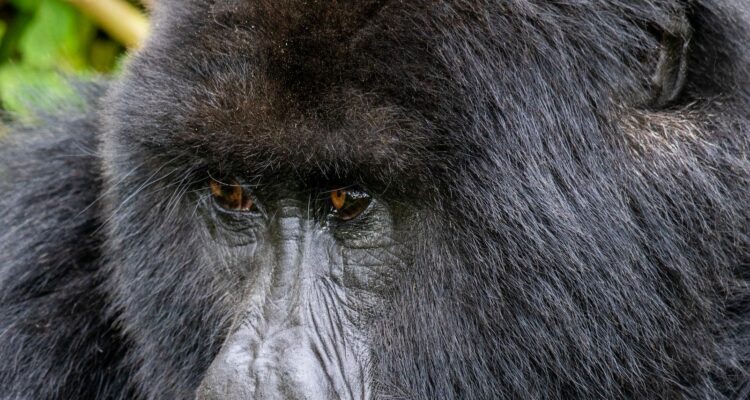
Rwanda is famous for its mountain gorillas, found in Volcanoes National Park, often combined with birding tours.
- What Is the Bird Watching Capital of the World?
Colombia is often hailed as the birdwatching capital of the world, boasting nearly 2,000 bird species, almost 10% of global biodiversity. Costa Rica, South Africa, and Ecuador also rank highly for their diverse tropical and endemic birds.
Conclusion
Rwanda may be small, but it delivers big for birders—especially if you’re hoping to see Albertine Rift endemics in places like Nyungwe and Volcanoes National Park, plus classic wetland and savannah species in Akagera. If you tell us what you’d love to see (and how much time you have), we can help shape a birding itinerary that fits your interests—whether it’s pure birding or a mix of birds, primates, and gorilla trekking.