Booking a gorilla trek represents a significant financial and physical investment. For many, the standard one-hour viewing window feels frustratingly brief. You blink, take a few photos, and the guides signal it’s time to hike back.
This dissatisfaction drives travelers toward the four-hour Gorilla Habituation Experience. But this extended trek introduces a new set of risks. You are tracking semi-habituated wild animals. The terrain is brutal. If you join a standard shared group, your entire pacing and proximity to the gorillas are tethered to the slowest hiker in your party.
Is the grueling four-hour habituation worth the extra stamina over the standard one-hour trek? And more importantly, what is the actual return on investment (ROI) when choosing a private group over a shared experience? Let’s break down the behavioral realities on the ground so you can structure your Uganda gorilla safaris effectively.
Behavior Mapping: Semi-Habituated vs. Fully Habituated Families
Understanding primate behavior is the most critical factor when evaluating your trek. The gorillas you track on a standard permit act vastly different than those undergoing habituation.
Fully Habituated Gorillas (The 1-Hour Trek)
Fully habituated families are accustomed to daily human presence. Their behavior is predictable.
- Proximity: They allow humans to approach within the mandated 7-meter distance without distress.
- Stress Levels: Low. Silverbacks rarely mock-charge unless provoked. The family focuses on feeding, resting, and grooming rather than monitoring you.
- Movement: Static. Once you locate them, they typically stay within a small radius.
Semi-Habituated Gorillas (The 4-Hour Habituation)
These groups are actively undergoing a three-to-five-year conditioning process. They tolerate humans, but they remain highly cautious.
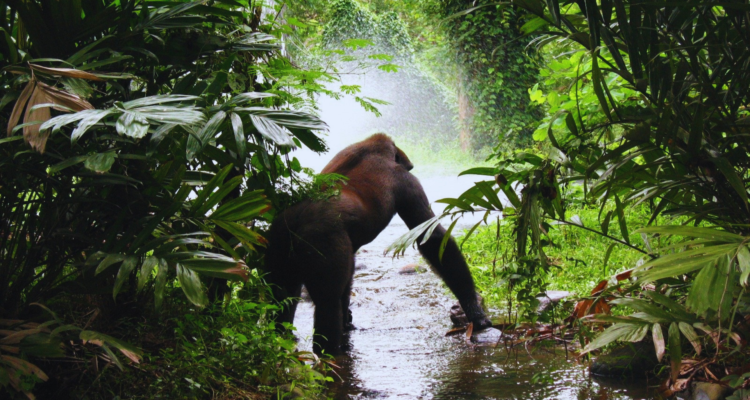
- Proximity: They dictate the distance. Initially, they may retreat into dense vegetation or climb higher into the canopy. It takes time and expert tracker intervention to earn their trust.
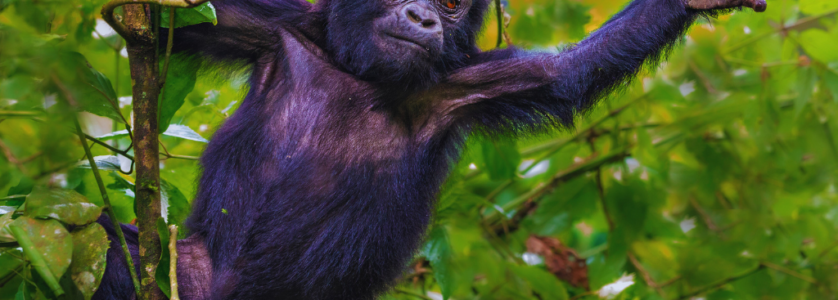
- Stress Levels: Moderate to High. You will observe alert postures. Mothers shield infants quickly. Silverbacks frequently vocalize and perform warning displays to test your group’s intentions.
- Movement: Erratic. You don’t just find them and sit down. You follow them as they forage, requiring continuous, often rapid, movement through thick, untracked bush.
Evaluating the ROI: Private vs. Shared Habituation
The four-hour habituation demands peak stamina. You aren’t walking on cleared trails; you are bushwhacking through Bwindi Impenetrable Forest. Here is where the distinction between a shared and private booking becomes critical.
When you book standard Uganda safaris & tours, habituation permits place you in a shared group of up to four tourists, plus researchers and guides.
If you get paired with trekkers who lack the physical conditioning for steep, muddy inclines, the entire group must stop. You lose valuable tracking time. Conversely, if you are the slower trekker, you risk pushing yourself to exhaustion trying to keep up with seasoned hikers, entirely ruining the experience.
A private habituation experience secures the permit exclusively for your party.
The Direct Comparison
| Feature | Shared Habituation Experience | Private Habituation Experience |
| Group Dynamics | Strangers with varying fitness levels. | Only your chosen travel companions. |
| Pacing | Dictated by the slowest member. | Tailored to your exact physical stamina. |
| Guide Focus | Divided among four individuals. | 100% dedicated to your questions and positioning. |
| Photography ROI | Competing for sightlines and angles. | Unobstructed positioning for premium wildlife shots. |
| Flexibility | Rigid schedule to accommodate everyone. | High. Stop for breaks or track aggressively as desired. |
Structuring Your Safari Investment
If your primary goal is checking a box and capturing a few clear photos without extreme physical exertion, the standard one-hour trek yields the highest immediate ROI.
However, if you want a raw, authentic immersion into wildlife conservation, the four-hour habituation is unmatched. To maximize this investment, securing a private group is paramount.
When you eliminate the variable of unpredictable strangers, you control the narrative of your trek. You coordinate directly with the lead researchers. You dictate the pace. By customizing your itinerary through specialized Uganda safari packages, the premium cost of a private buyout translates directly into a seamless, highly personalized wildlife encounter.
Frequently Asked Questions (FAQs)
How physically demanding is the Gorilla Habituation Experience?
Extremely demanding. Expect 4 to 8 hours of strenuous hiking through thick jungle, steep ravines, and high altitudes. You must be in strong cardiovascular condition and capable of navigating uneven, slippery terrain.
Can we guarantee a private habituation trek?
Yes, but it requires purchasing all four available permits for that specific gorilla family on your tracking day. This must be arranged months in advance due to strict daily permit limits.
Will semi-habituated gorillas attack?
Actual attacks are incredibly rare. Semi-habituated gorillas may perform mock charges or vocalize aggressively to establish dominance. Your trackers are highly trained researchers who know exactly how to de-escalate these situations. You must follow their instructions instantly.
Is it worth doing both the standard trek and the habituation experience?
Yes. Many elite itineraries combine them. The standard trek offers guaranteed close-up photography of relaxed gorillas, while the habituation experience provides a deeper, grittier dive into active primate conservation.