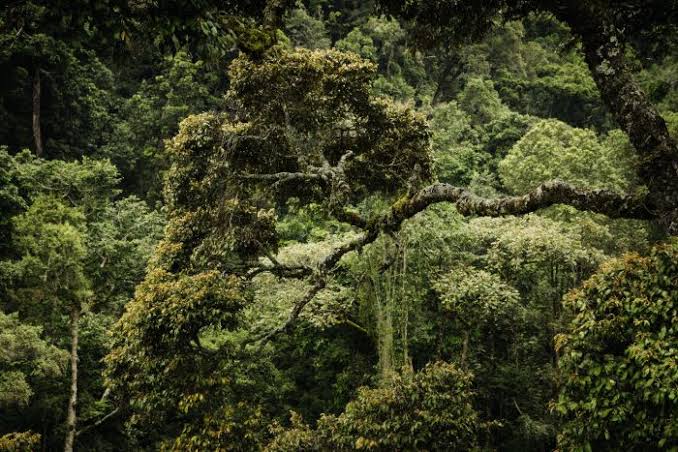
Let us give you a detailed breakdown of these Rwanda conservation areas!
Akagera National Park

Akagera National Park is one of the most popular conservation areas in Rwanda, worth exploring during Rwanda tours.
This Rwanda national park, Akagera, sits in eastern Rwanda, stretching over about 1,122 square kilometers along the border with Tanzania.
Founded in 1934, Akagera National Park nearly lost its big animals during tough times, but since African Parks took over management in 2010 with the government, it’s bounced back strongly, with lions returned in 2015, rhinos in later years, and more white rhinos added recently.
Akagera Park is Rwanda’s only savanna park, full of lakes, rivers, wetlands, and open plains, which means that tourists on Rwanda wildlife safaris can spot the Big Five (lions, elephants, rhinos, leopards, buffalo), plus giraffes, zebras, hippos, antelopes, hyenas, and tons of birds (nearly 500 species), including shoebills.
The Akagera safari activities include game drives (day or night), boat trips on Lake Ihema for hippos and birds, guided bush walks, fishing, and birdwatching, among others.
The average costs of exploring Akagera National Park for international visitors are around $100 per person for entry (often per day or night, with multi-night discounts), plus extras like $40-60 for night drives or boat trips, and vehicle fees. Permits and activities vary by residency.
The available Akagera National Park accommodation and stay options range from luxury spots like Magashi Camp or Wilderness camps, mid-range tented lodges such as Ruzizi, to budget choices like Akagera Game Lodge or camping.
The best time to visit Akagera National Park is during the dry seasons, which run from June to September or December to February, when animals gather at water sources for easier spotting, and there are drier roads which ease movements.
From Kigali, Akagera National Park is a straightforward 2-3 hour drive east on good roads to the main gate, or you can take public transport partway and arrange a transfer to the park headquarters.
Volcanoes National Park
Rwanda’s Volcanoes National Park is one of the most visited conservation areas in the country wort traversing during safaris in Rwanda.
In northwest Rwanda, Volcanoes National Park is a 160-square-kilometer park that covers five Virunga volcanoes and borders Uganda and the Democratic Republic of Congo.
Set up in 1925 (Albert National Park) to protect mountain gorillas, Volcanoes National Park is now a global icon for primate conservation, with ongoing habitat expansion.
The stars of Volcanoes National Park are the endangered mountain gorillas in bamboo and rainforest habitats, plus golden monkeys, other primates, birds (over 170 species), and picturesque views of peaks like Karisimbi and Bisoke.
Some of the main things to do in Volcanoes National Park are gorilla trekking (the big draw), golden monkey tracking, volcano hikes (like Bisoke for crater lakes or tougher Karisimbi climbs), guided nature walks, and unique cultural visits to Batwa communities or Iby’Iwacu village.
Some of the costs to incur at Volcanoes National Park include the entry fees, which are about $40-100 USD for foreigners, but Rwanda gorilla permits cost $1,500 (or discounted to $1,050 with multi-park visits or off-peak deals), golden monkey $100, and hikes $75+.
Lodging in and near Volcanoes National Park includes luxury eco-lodges like Bisate Lodge or Sabyinyo Silverback Lodge, mid-range options, and budget guesthouses in Kinigi or Musanze.
The best time to explore Volcanoes National Park is during the dry seasons (June-September, December-February), which makes trekking easier with less mud and better weather.
To reach Volcanoes National Park, most tourists drive 2-3 hours from Kigali to Musanze on paved roads, then a short hop to Kinigi headquarters; public buses or shuttles from Uganda work too.
Nyungwe Forest National Park
Nyungwe Forest National Park is another of the best conservation areas in Rwanda, often visited on Rwanda trips.
In southwest Rwanda near Lake Kivu and bordering the Democratic Republic of Congo and Burundi (Kibira National Park), Nyungwe Forest National Park, a 970+ square kilometer ancient montane forest, is one of Africa’s oldest rainforests, protecting water sources for much of the country (75%).
Gazetted in 2005, Nyungwe National Park is a biodiversity hotspot that is home to 13 primate species (chimps, colobus, blue monkeys, etc.), over 300 birds, 200+ tree types, orchids, waterfalls, and rare mammals like the elusive leopards.
Popular Nyungwe Forest National Park activities are chimpanzee tracking, the famous canopy walk for treetop views, guided nature walks on many trails (130km), birdwatching, and the multi-day Congo Nile Trail hike or bike.
The average Nyungwe National Park safari prices include entry fees, which go for around $40 for foreigners, a chimp permit of $100-150, a canopy walk of $15-60, and guided walks of $30-60.
Tourists visiting Nyungwe National Park can stay at luxury places like One & Only Nyungwe House, mid-range Nyungwe Top View Hill Lodge, budget guesthouses like Gisakura, or camping.
The most optimal times to visit Nyungwe National Park are during the dry months (June-October, December-February), which give clearer trails, though the misty rains add magic year-round.
Nyungwe Forest National Park is a 4-5 hour drive southwest from Kigali to gates like Gisakura, via good roads or buses with scenic routes via Lake Kivu being exceptionally nice.
Gishwati-Mukura National Park
Gishwati Mukura National Park is another of the conservation areas in Rwanda worth traversing during Rwanda vacations.
Rwanda’s newest park (2015), in the northwest near Lake Kivu, Gishwati Mukura National Park combines Gishwati and Mukura forests over about 62 square kilometers on the Congo-Nile Ridge.
Gishwati Mukura NP, set up to restore fragmented habitats after heavy past loss in Rwanda, features attractions like the eastern chimpanzees, golden and blue monkeys, birds (over 130 species), duikers, and scenic views of surrounding landscapes.
Some of the fun safari activities done in Gishwati Mukura NP focus on chimpanzee trekking, monkey tracking, birdwatching, and community walks sharing conservation stories.
The costs to incur when exploring this Rwanda safari park include entry fees, which are around $40, chimp tracking of $100, and other activities that go for around $20-50.
The Gishwati Mukura National Park lodging options include tented camps, Rubavu lodges, camping, or day trips from nearby Volcanoes NP lodges.
The most optimal time to visit Gishwati Mukura NP is the dry seasons (June-September), which offer better trails and visibility.
Tourists looking forward to traversing Gishwati Mukura NP drive 2 hours west from Kigali to Rubavu, then off-road to the entrances, or they can easily access it from Volcanoes National Park or Lake Kivu.
Buhanga Eco Park
Buhanga Eco Park is another of the good conservation areas in Rwanda worth exploring during Rwanda safaris.
Near Volcanoes National Park in Musanze district, Buhanga Eco Park is a small 31-hectare sacred forest that holds cultural importance as a former royal coronation site for Rwandan kings.
Buhanga Eco Park is a good conservation area in Rwanda with several attractions that include the Unity tree, towering trees, birds, butterflies, lava stone trails, and a historic cave, all seen during safaris in Rwanda.
Some of the fun safari activities done at Buhanga Ecological Park include guided nature walks and hikes to learn about history and nature.
The costs to incur when visiting Buhanga sacred forest include the entry fees, which are around $40 for foreigners.
Travelers exploring Buhanga Eco Park can stay in nearby Musanze or Volcanoes National Park safari lodges.
Much as Buhanga Eco Park can be visited all year-round, the dry seasons are more comfortable and offer the best sightings of the marvelous things to see in this conservation area.
Tourists heading to Buhanga eco park can get there via a short drive (8km) west of Musanze town.
Nyandungu Eco Park
Nyandungu Eco Park is another of the fascinating conservation areas in Rwanda worth visiting during Rwanda trips.
In the heart of Kigali, Rwanda’s capital, Nyandungu Eco Park is a 121-hectare restored urban wetland and forest area turned eco-park, opened recently after cleanup from degradation caused by sand mining, quarrying, overgrazing, etc.
Restored after the Rwandan government major restoration project in 2016 through the Rwanda Environment Management Authority and funded by the Rwanda Green Fund (FONERWA), with help from international partners like the UK, Italy, and UN Environment, it was opened to the public in 2022.
It became Kigali’s first and largest urban eco-tourism park, with over 17,000 indigenous trees planted from 55 species, trails, ponds, and facilities to fight flooding, reduce pollution, and boost biodiversity.
Some of the unique attractions in the Nyandungu eco park include the restored wetlands, native fig forests, multiple ponds, over 100 bird species (weavers, herons, kingfishers, African eagles, crested cranes, bulbuls, egrets), butterflies, planted indigenous trees, etc.
The Nyandungu eco park offers tourists perfect opportunities to partake in activities like urban birding, hiking or walking (8-10km of trails), cycling, picnics in designated spots, educational tours about wetland habitats and conservation, nature relaxation with families, etc.
The costs incurred at Nyandungu Eco Park vary by visitor nationality, with entry fees going for about 5,000-20,000 RWF for foreign visitors and cheaper for locals. Biking and Bike rentals add extra (RWF 7,000), making it more affordable than any other safari park.
Tourists exploring this Nyandungu ecological park can stay in most Kigali hotels and guest houses (budget, midrange, and luxury).
Nyandungu Eco Park is open all year round from 6:00 am to 6:00 pm daily, but with the dry seasons (June to September and December to February) offering better weather with clear blue skies for outdoor activities, though its lush green landscapes shine even in the rainy months.
Travelers can reach Nyandungu eco park by driving about a 5-12 minute drive to the eco park or take a taxi, bus, or hire a car from tour operators who know their way around Kigali, Rwanda.
Mukura Forest Reserve (Now Part of Gishwati-Mukura NP)
Mukura Forest Reserve is another of the conservation areas in Rwanda.
Nestled in northwest Rwanda in the Rutsiro and Ngororero districts along the Albertine Rift and Congo Nile Divide Trail at elevations of 2600 meters above sea level, Mukura forest reserve is a high altitude forest that once connected to larger areas of the Volcanoes National Park and Nyungwe National Park before it became isolated due to deforestation.
Mukura covers part of the Gishwati Mukura National Park’s total ~34-35.58 square kilometers (with Mukura being the smaller section).
Protected since 1951 as a reserve, merging with Gishwati in 2015-2016 to form the national park, with tourism opening around 2019-2020 to focus on restoration and eco-tourism, it is now a biodiversity hotspot that hosts several attractions, including 150 mammal species, primates, reptiles, 130+ birds, amphibians, etc.
The safari activities done at Mukura Forest Reserve are quite limited, and they include guided nature hikes, potential monkey and chimpanzee tracking, birdwatching, cultural experiences, etc.
Costs follow Gishwati-Mukura NP fees, which include entry fees of around $10-40 USD (or equivalent) for foreigners, with activities like chimp tracking ~$100-150 (check availability at RDB).
Travelers exploring Mukura reserve can stay in Rubavu lodges and hotels, Lake kivu accommodation, or just take a day trip from Volcanoes NP area accommodations.
The best time to visit Mukura Forest reserve is during the dry seasons from June to September (long dry) or December to February, for clearer trails and easier access without mud.
Getting there is by a drive of about 2-3 hours west from Kigali to Rubavu or Ngororero, then off-road to park entrances; accessible via Lake Kivu roads or from Volcanoes NP.
Gishwati Forest Reserve (Integrated into Gishwati-Mukura NP)
Gishwati forest reserve is another of the good conservation areas in Rwanda seen during Rwanda trips.
Gishwati Forest Reserve is located in northwest Rwanda near Lake Kivu in the western province.
Once a vast 250,000-acre rainforest connecting to Congo and Nyungwe, Gishwati Forest Reserve shrank dramatically to ~1,500 acres due to human population pressure, agriculture, and post-genocide impacts.
However, restoration since 2007 (via programs like the Gishwati Area Conservation Program) has grown it back, and it is now under the larger section of the 34-35 sq km Gishwati Mukura National Park.
Some of the unique things to see in Gishwati Forest Reserve include the eastern chimpanzees (~20-30 individuals), golden monkeys, blue monkeys, vervet monkeys, L’Hoest’s monkeys, diverse trees/shrubs (58+ species), over 84 bird species (like mountain yellow warblers, wood-hoopoes, etc.), plus duikers, river hogs, and more.
Tourists exploring Gishwati Forest Reserve can potentially do chimpanzee trekking, monkey tracking, guided birding, nature hikes on designated trails, and community tours, etc.
Prices follow Gishwati-Mukura NP fees, which include entry fees of around $10-40 USD (or equivalent) for foreigners, with activities like chimp tracking ~$100-150 (check availability at RDB).
Travelers exploring Gishwati forest reserve can stay in Rubavu lodges and hotels, Lake Kivu accommodation, or just take a day trip from Volcanoes NP area accommodations.
The best time to visit Gishwati Forest reserve is during the dry seasons from June to September (long dry) or December to February, for clearer trails and easier access without mud.
Getting there is by a drive of about 2-3 hours west from Kigali to Rubavu or Ngororero, then off-road to park entrances; accessible via Lake Kivu roads or from Volcanoes NP.
Busaga Forest Reserve
Busaga Forest Reserve is another of the conservation areas in Rwanda worth exploring during Rwanda safaris.
It is a smaller protected natural forest in central Rwanda (Muhanga district area, along ridges like in the Amayaga region). Busaga Forest Reserve’s modest size (historically around 191 ha, with some loss but ongoing protection) has gained recognition as an Important Bird and Biodiversity Area (IBA) in Rwanda recently for its role in conserving threatened species of birds.
Being a rich biodiversity hotspot in Rwanda, Busaga Forest Reserve is uniquely known for being the only known breeding site for the Critically Endangered Hooded Vulture in Rwanda, plus other birds, primates, and plants in a gallery/ remnant forest setting.
Tourism is limited in Busaga Forest Reserve because it is not heavily developed for visitors, with mainly nature observation, birdwatching, or guided walks accessible through partaking in community or conservation efforts.
Since entry is likely low, there are no formal fees (as a reserve, often community-managed or free access with guides).
Travelers who wish to access Busaga Forest Reserve stay in nearby towns or Muhanga district lodges.
Year-round access to Busaga Forest Reserve is possible, but the dry seasons better for access.
Road access to Busaga Forest Reserve is from the main routes in central Rwanda that may require local guidance due to its outlier status.
Cyamudongo Forest Reserve
Cyamudongo forest reserve is another of the conservation areas in Rwanda, often visited during Rwanda tours.
It is a small, isolated forest patch in southwest Rwanda, linked ecologically to Nyungwe National Park (part of its extended biodiversity, often accessed via Nyungwe permits).
This remnant montane forest with high primate value, Cyamudongo Forest Reserve, is known for hosting attractions like the primates (including habituated chimpanzees in one of two groups of about 30 individuals here), birds, and unique forest flora, etc.
The main safari activity done in Cyamudongo forest reserve is chimpanzee trekking (one of two habituated troops in the Nyungwe Forest system), plus guided walks, bird observation, etc.
Fees incurred when visiting Cyamudongo Forest Reserve are closely linked to those of Nyungwe NP, i.e., the chimp permit is $150 USD for foreign non-residents, $75 for foreign residents/EAC, $25 for Rwandans/EAC; plus park entry if required.
Travelers seeking to explore this conservation area, Cyamudongo Forest Reserve, can stay in nearby Nyungwe National Park hotels and lodges or in the Gisakura area.
The best time to traverse Cyamudongo Forest Reserve is during the dry seasons, which are preferred for their provision of drier trails.
Tourists can get to Cyamudongo Forest Reserve by journeying through the southwest part of Rwanda and accessing it via Nyungwe gates (e.g., near Gisakura), and it is often combined with main park visits.
Rugezi Marsh
The Rugezi marsh is another of the places in Rwanda considered a major conservation area.
It is a vital high-altitude wetland in northern Rwanda (near Musanze/Volcanoes National Park area), key for water catchment and as a Ramsar-like site protecting biodiversity.
The Rugezi Marsh is a prime spot for birdwatching, being a bird habitat with a wide array of birds, including the prehistoric shoebills (iconic, though rare), papyrus gonoleks, herons, eagles, and many Albertine Rift endemics.
Some of the major safari activities done in the Rugezi Marsh, besides guided birding tours, are the guided nature walks in the marsh, often with boat or walk access.
The safari prices to incur when exploring the Rugezi Marsh are very low, i.e., around $50-150 USD per person/day for guided tours (varies by operator); sometimes free in parts, but guided excursions are strongly recommended.
Travelers who wish to explore the Rugezi Marsh can stay in Musanze lodges or Volcanoes National Park accommodations.
Year-round birding is very possible in the Rugezi Marsh, though the dry seasons (June-September, December-February) offer better access/trails, whereas the rainy times may boost bird spotting activity.
The Rugezi Marsh can be accessed via northern Rwanda roads from Kigali (2-3 hours to the Musanze area), followed by local access or transfers using the suggested 4×4 vehicles that are helpful for unpaved parts. These visits are often combined with Volcanoes National Park visits.
Outstanding Rwanda Tour Operators that offer Safari Excursions to Rwanda Conservation Areas
- Prime Safaris and Tours Ltd
- Wild Gorilla Safaris
- Gorilla Safari Rwanda
- Rwanda Gorilla Tracking Safaris
- Gorilla Tracking Rwanda
- Africa Safaris Tours
- Gorilla Safaris and Tours
Liaise with any of these reputable Rwanda Tour Operators to help you plan safaris to any of these conservation areas in the land of a thousand Hills!
Commonly Asked Questions About Rwanda Conservation Areas
- How Many National Parks Are in Rwanda?
There are four main national parks in Rwanda that include Akagera National Park, Volcanoes National Park, Nyungwe Forest National Park, and Gishwati-Mukura National Park.
- Which is the Most visited National Park in Rwanda?
Volcanoes National Park, Rwanda, thanks to being a habitat for endangered mountain gorillas, is the most visited National Park in Rwanda.
- Which is the Largest Rwanda National Park?
Akagera National Park, which spans ~1,122 km2, is the largest of Rwanda’s national parks, the only savanna park with the big five savannah animals in the land of a thousand hills.
- Which is the Newest National Park in Rwanda?
Gishwati-Mukura National Park, established in 2015, is the newest of all the Rwanda national parks.
- What Challenges are Faced by Rwanda Conservation Areas?
Some of the serious challenges facing conservation areas in Rwanda include poaching (reduced), habitat pressure, and climate shifts, but strong reforestation and community work help.
Rwanda’s protected areas or conservation zones showcase amazing recovery and Rwanda’s commitment to nature and people. Whether chasing gorillas in misty mountains, spotting lions on savannas, or relaxing in urban wetlands, these tourist spots and conservation areas offer unforgettable experiences while supporting conservation.
Contact us now and let us plan the best Rwanda safari trip for you to see why Rwanda stands out with its conservation areas!